
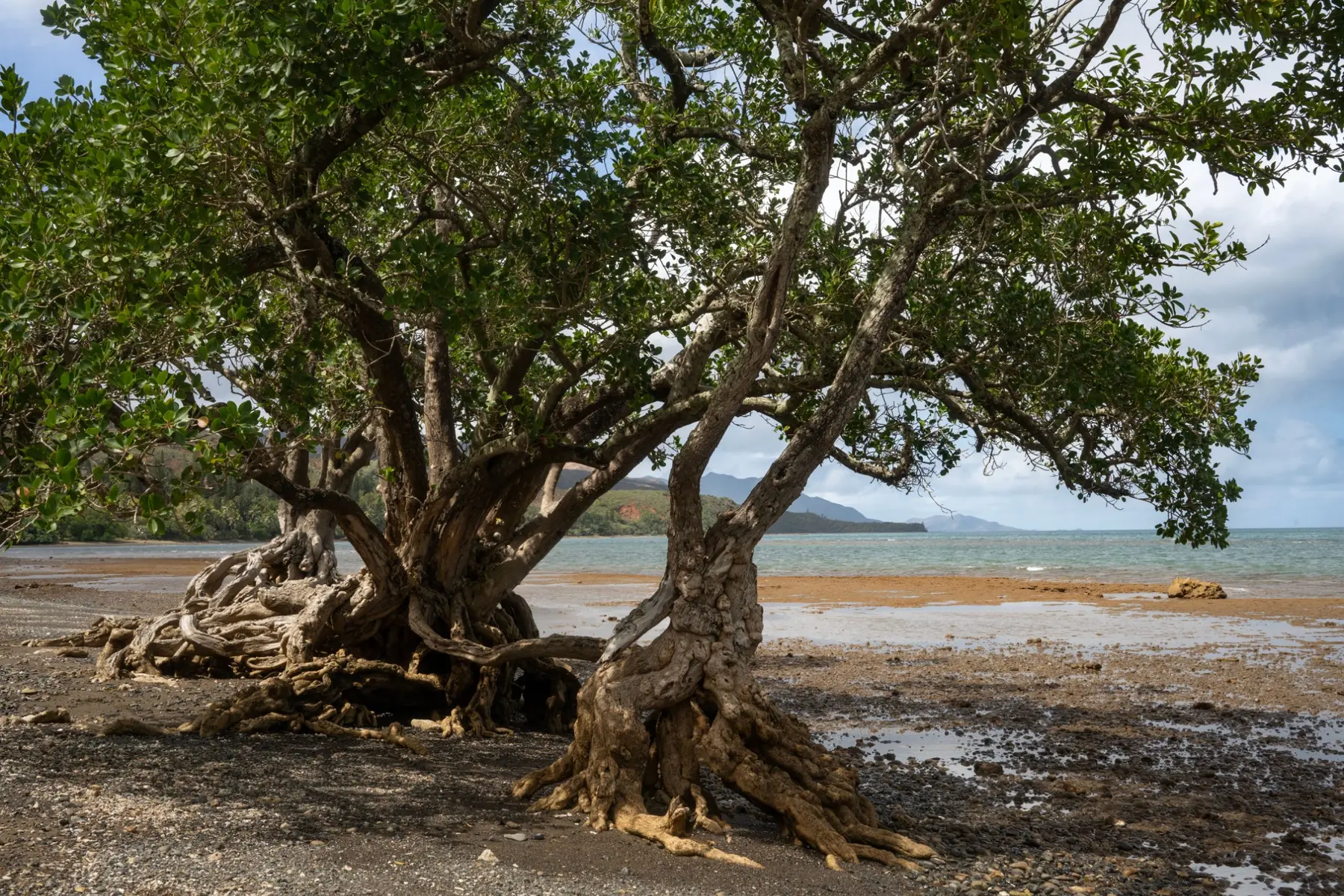
Built for a particular place and way of living.
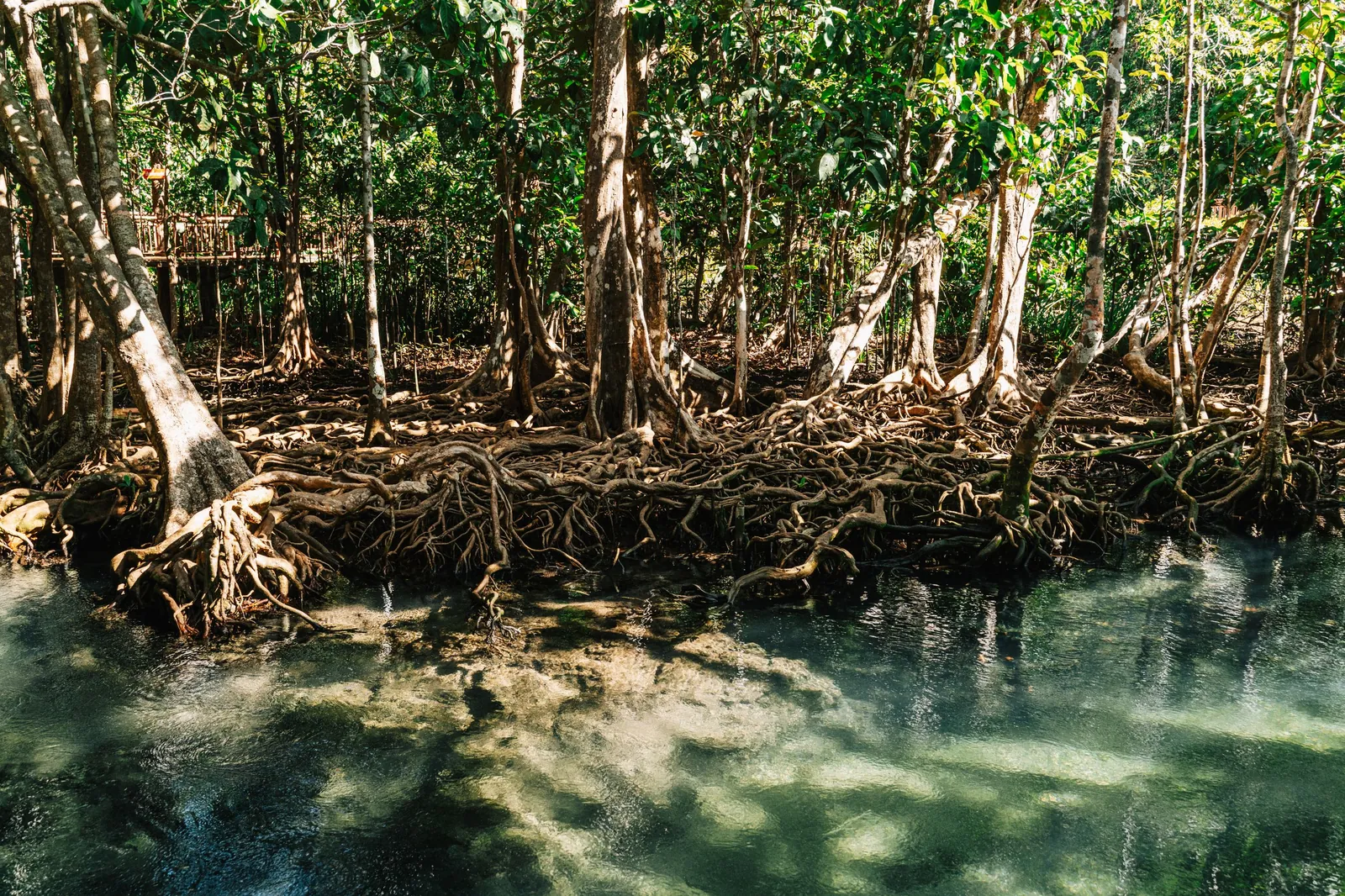
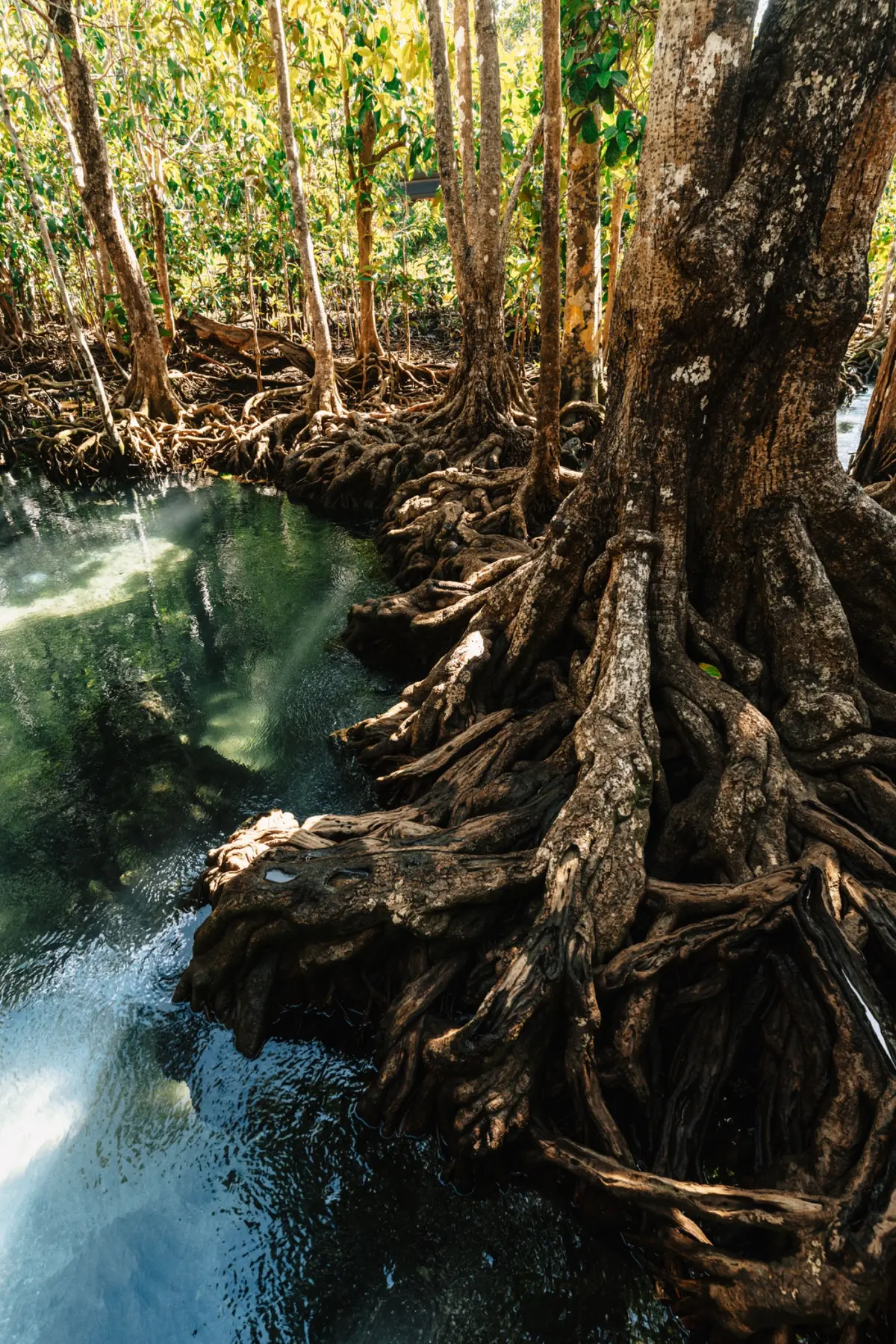
Mangroves are coastal forests formed by salt tolerant trees and shrubs. Their roots slow water, trap sediment and create intricate nursery habitat where land and sea meet.
Range. Sheltered tropical and subtropical coasts around the world.
Habitat. Estuaries, lagoons, tidal creeks, deltas and protected coastal margins.
Natural history
Food and feeding. Mangroves are plants and ecosystems rather than animals; energy comes from photosynthesis, while fallen leaves fuel detrital food webs.
Reproduction and life history. Different mangrove species use different strategies; several produce buoyant propagules that can disperse with tides before rooting.
Conservation priorities depend on the species’ biology, habitat, range and rate of reproduction. These factors shape how quickly a population can recover and which pressures require the most attention.
What role does it play?
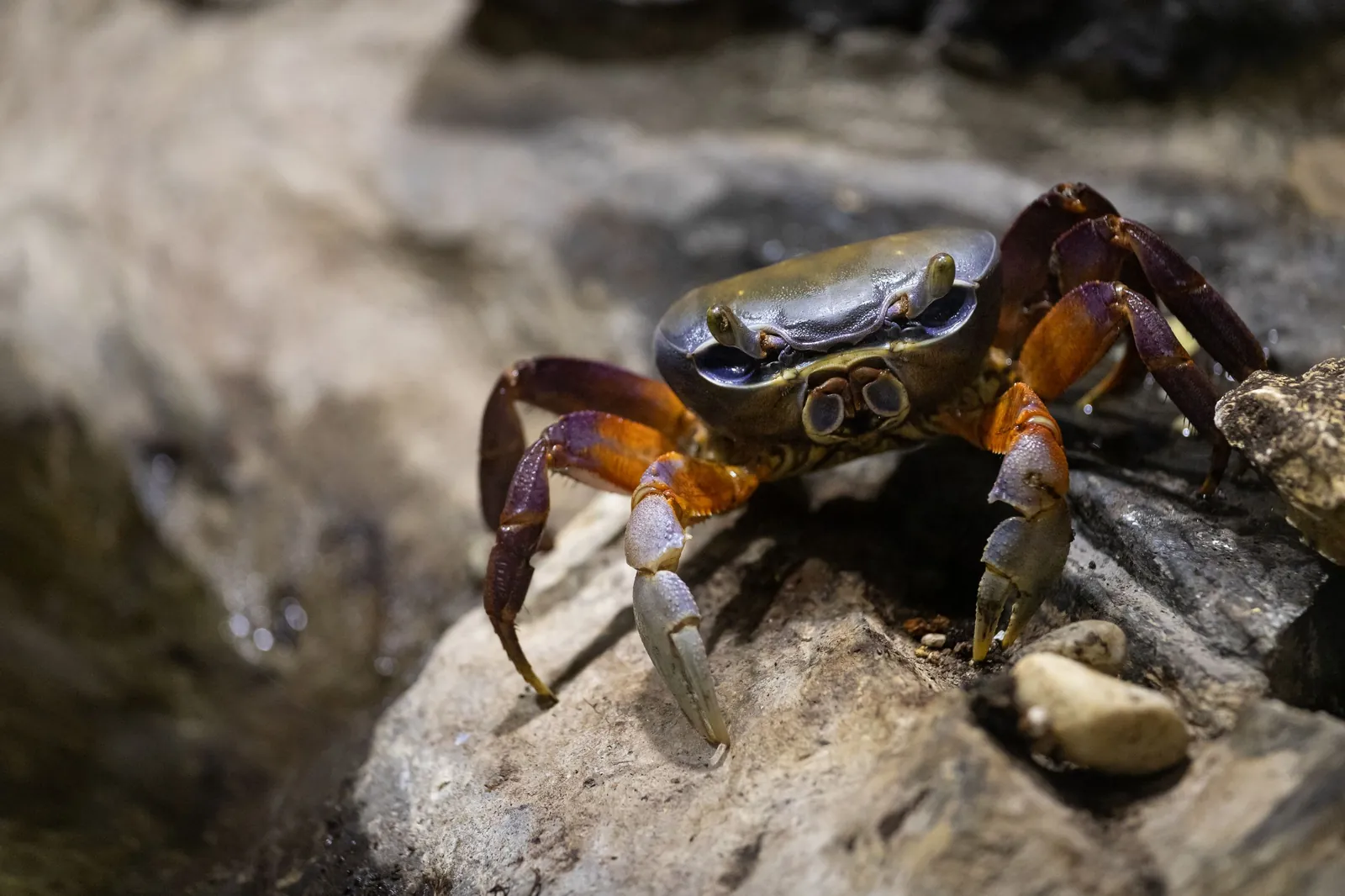
Mangroves store blue carbon, support fisheries, protect shorelines, filter sediment and provide habitat for birds, fish, crustaceans and reptiles.
Ecological roles are rarely isolated. Predators depend on prey, grazers depend on productive vegetation, marine species depend on currents and nursery habitats, and forest species may depend on canopy connections that extend beyond protected area boundaries. Protecting a species often becomes a question about the wider system that keeps its life cycle possible.
Pressure and practical action
Threats vary between populations and places, so the list below is a guide to the major pressures associated with this species or group rather than a claim that every population faces every threat equally.
Key pressures
- Clearing for aquaculture, infrastructure and development
- Changes to freshwater and sediment flows
- Pollution and solid waste
- Sea level rise where landward migration is blocked
What helps
- Protect existing mature mangroves before relying on planting
- Restore natural hydrology and correct species to suitable zones
- Keep room for landward migration
- Connect mangrove protection with fisheries and community livelihoods
Sri Lanka context
Sri Lanka’s lagoons and estuaries contain important mangrove systems. Restoration works best when it restores hydrology and natural recruitment rather than simply planting large numbers of seedlings in unsuitable places.
Where CuteFela discusses a species in Sri Lanka, the local context stays specific by considering the habitat involved, whether the species is native, how people and wildlife share space, and which conservation tools are relevant. For species that do not occur on the island, the guide says so directly.
Start with specialist sources.
Conservation assessments are periodically updated. Use the linked specialist and institutional sources for the latest status, range and management information.
UNEP Blue carbon ecosystems ↗Global Mangrove Alliance ↗