
Built for a particular place and way of living.
The Sri Lankan junglefowl is an endemic forest and woodland bird and the national bird of Sri Lanka. Males are brilliantly coloured, while females are far more cryptic, an adaptation suited to ground nesting and forest cover.
Range. Found only in Sri Lanka.
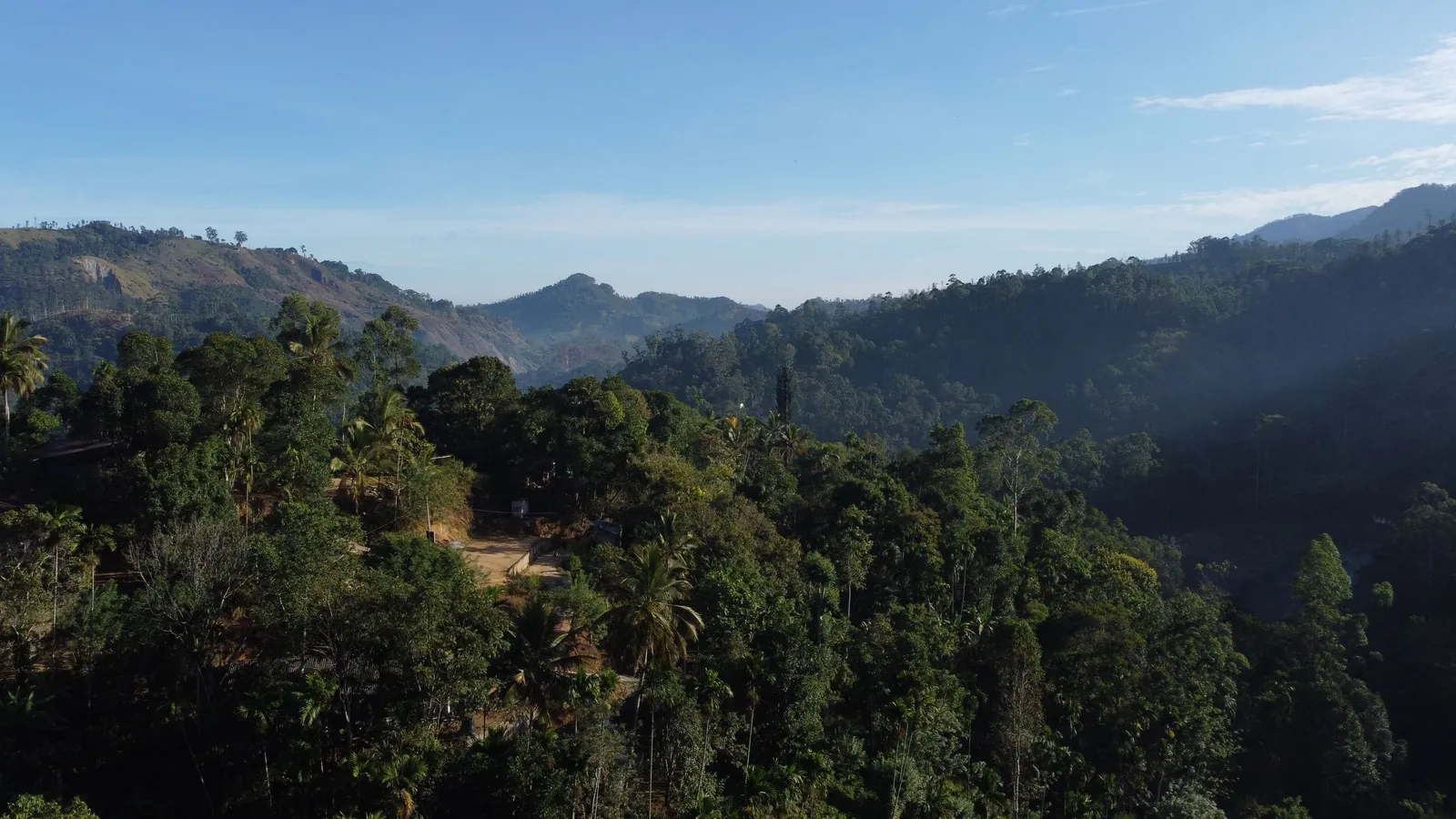
Habitat. A broad range of forest, scrub and wooded habitats from lowlands to hill country.
Natural history
Food and feeding. Seeds, fruit, shoots and invertebrates gathered mainly while foraging on the ground.
Reproduction and life history. Ground nests are concealed in vegetation; chicks are mobile soon after hatching and follow the female.
Conservation priorities depend on the species’ biology, habitat, range and rate of reproduction. These factors shape how quickly a population can recover and which pressures require the most attention.
What role does it play?
Junglefowl consume and disperse plant material, eat invertebrates and form part of the prey base for larger predators.
Ecological roles are rarely isolated. Predators depend on prey, grazers depend on productive vegetation, marine species depend on currents and nursery habitats, and forest species may depend on canopy connections that extend beyond protected area boundaries. Protecting a species often becomes a question about the wider system that keeps its life cycle possible.
Pressure and practical action
Threats vary between populations and places, so the list below is a guide to the major pressures associated with this species or group rather than a claim that every population faces every threat equally.
Key pressures
- Local habitat loss and fragmentation
- Road mortality and disturbance
- Hybridisation concerns where domestic fowl interact closely with wild populations
- Predation pressures in disturbed landscapes
What helps
- Protect varied native forest and scrub habitat
- Reduce disturbance around breeding areas
- Avoid releasing domestic birds near sensitive wild populations
- Monitor endemic wildlife beyond only the most threatened species
Sri Lanka context
Because the species is found nowhere else, Sri Lanka carries the full responsibility for its wild future. It is also a useful reminder that endemic conservation includes common looking everyday wildlife, not only large mammals.
Where CuteFela discusses a species in Sri Lanka, the local context stays specific by considering the habitat involved, whether the species is native, how people and wildlife share space, and which conservation tools are relevant. For species that do not occur on the island, the guide says so directly.
Start with specialist sources.
Conservation assessments are periodically updated. Use the linked specialist and institutional sources for the latest status, range and management information.
BirdLife International ↗Sri Lanka Department of Wildlife Conservation ↗