
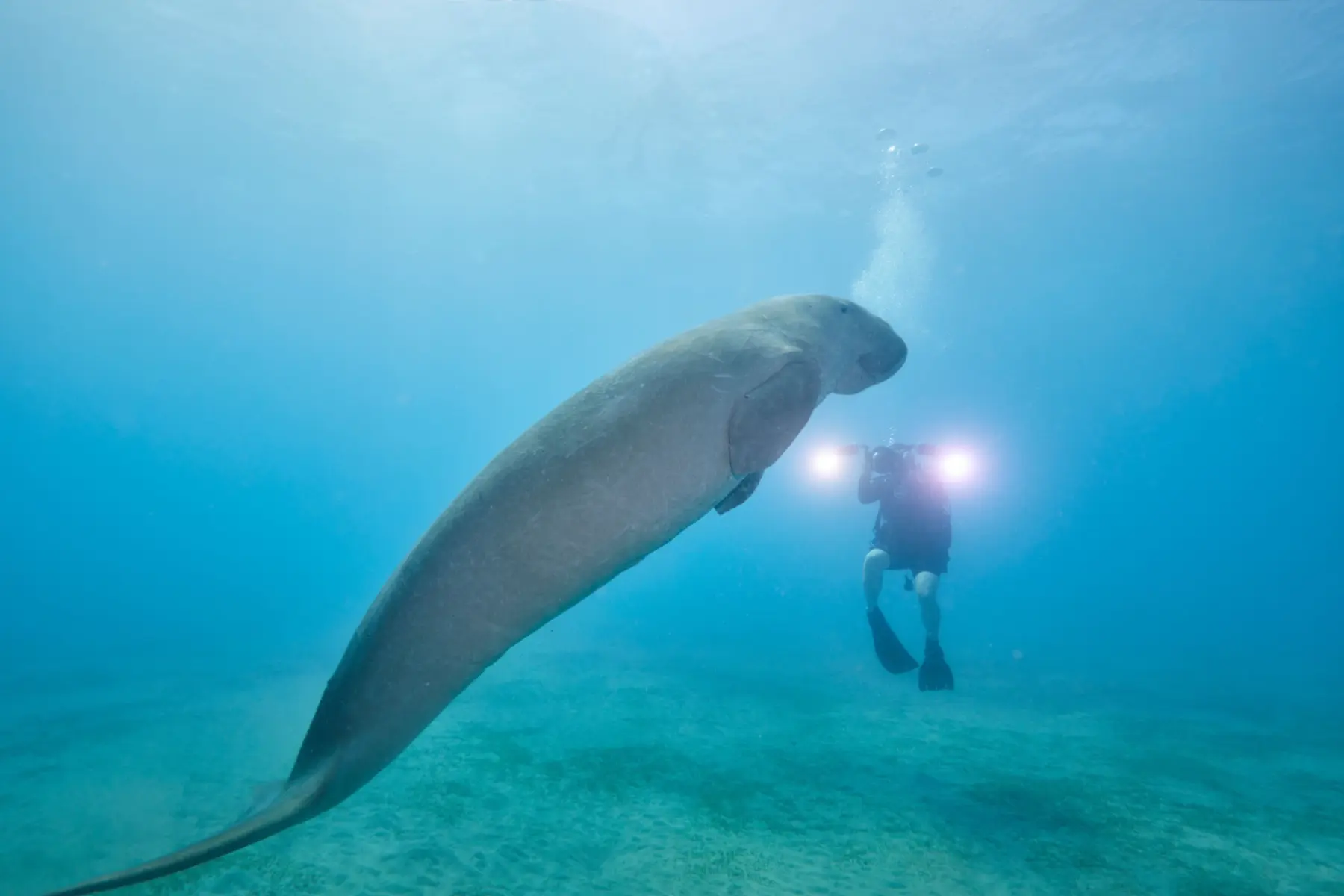
Built for a particular place and way of living.
Dugongs are large marine herbivores that depend on seagrass meadows. Their slow reproduction and strong habitat dependence mean a decline in coastal seagrass or an increase in net entanglement can have effects lasting decades.
Range. Warm coastal waters from East Africa and the Red Sea through South and Southeast Asia to Australia and the western Pacific.
Habitat. Shallow protected bays, channels and coastal waters with extensive seagrass.
Natural history
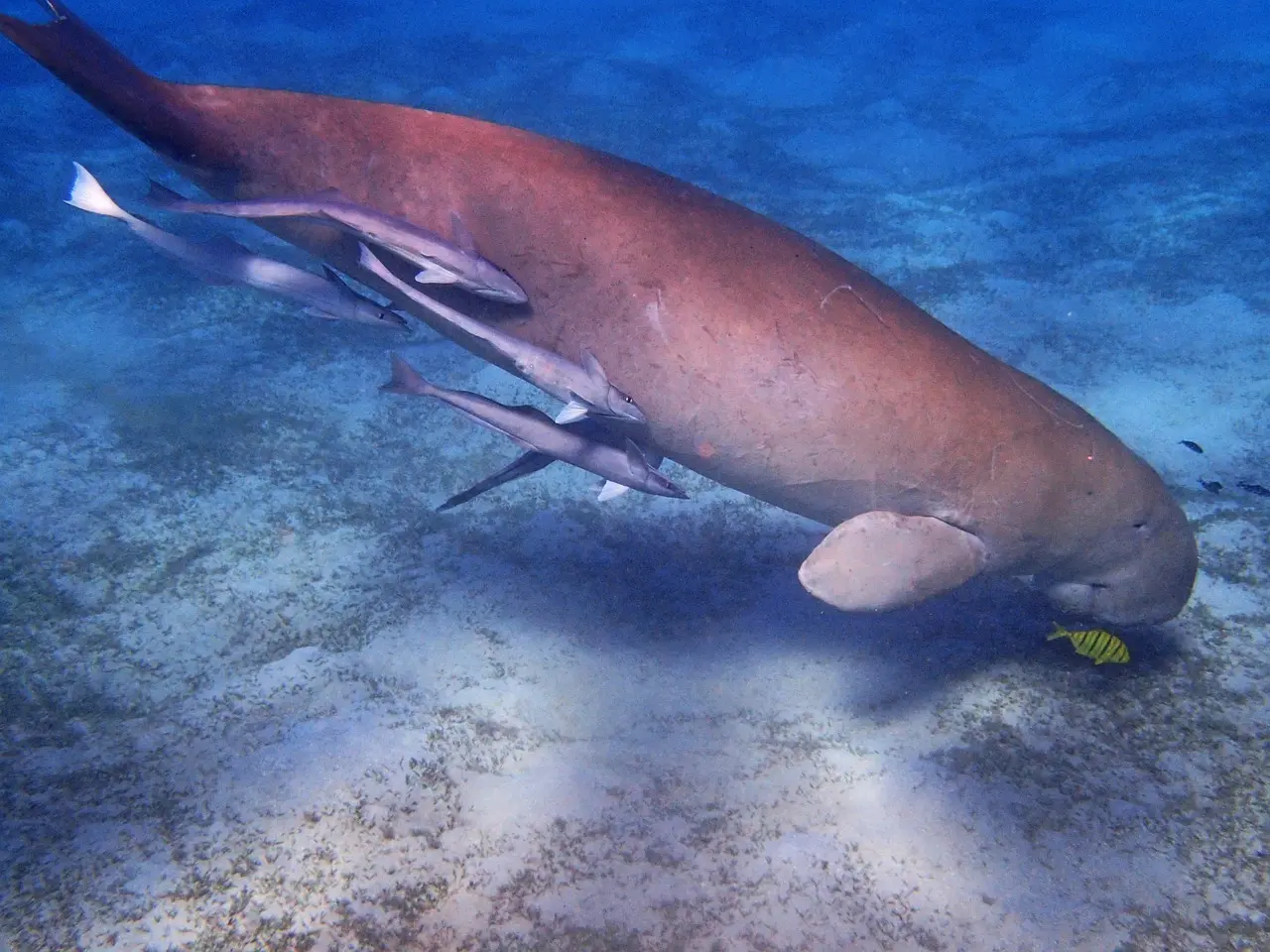
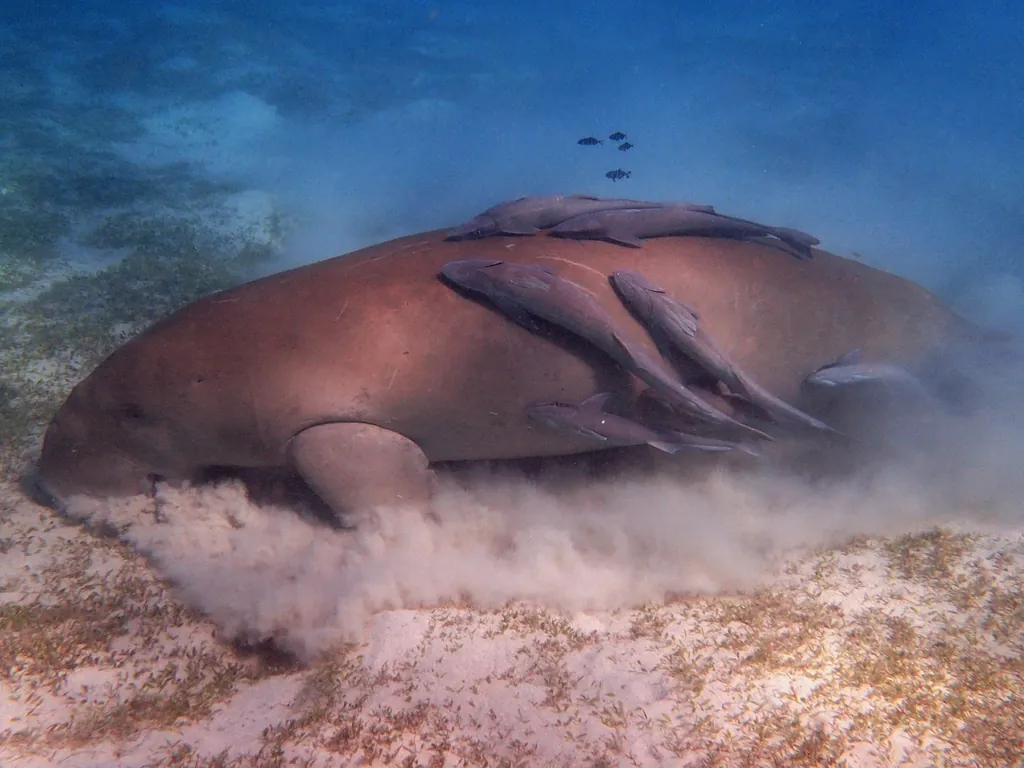
Food and feeding. Almost entirely seagrasses, grazed along the seabed.
Reproduction and life history. Females usually produce a single calf after a long gestation, with long intervals between births and prolonged maternal care.
Conservation priorities depend on the species’ biology, habitat, range and rate of reproduction. These factors shape how quickly a population can recover and which pressures require the most attention.
What role does it play?
Dugong grazing influences seagrass structure and nutrient cycling; conserving dugongs often means conserving entire shallow water ecosystems.
Ecological roles are rarely isolated. Predators depend on prey, grazers depend on productive vegetation, marine species depend on currents and nursery habitats, and forest species may depend on canopy connections that extend beyond protected area boundaries. Protecting a species often becomes a question about the wider system that keeps its life cycle possible.
Pressure and practical action
Threats vary between populations and places, so the list below is a guide to the major pressures associated with this species or group rather than a claim that every population faces every threat equally.
Key pressures
- Loss and degradation of seagrass meadows
- Entanglement in fishing nets
- Boat strikes
- Hunting in parts of the range
What helps
- Map and protect seagrass habitat
- Reduce gillnet and entanglement risk
- Manage vessel speed in key habitat
- Work across national borders because populations can be wide ranging
Sri Lanka context
Dugongs were historically associated with waters around north western Sri Lanka and the Gulf of Mannar/Palk Bay region. They are now rarely encountered, making seagrass protection and reliable monitoring particularly important.
Where CuteFela discusses a species in Sri Lanka, the local context stays specific by considering the habitat involved, whether the species is native, how people and wildlife share space, and which conservation tools are relevant. For species that do not occur on the island, the guide says so directly.
Start with specialist sources.
Conservation assessments are periodically updated. Use the linked specialist and institutional sources for the latest status, range and management information.
CMS Dugong MOU ↗IUCN Red List ↗