
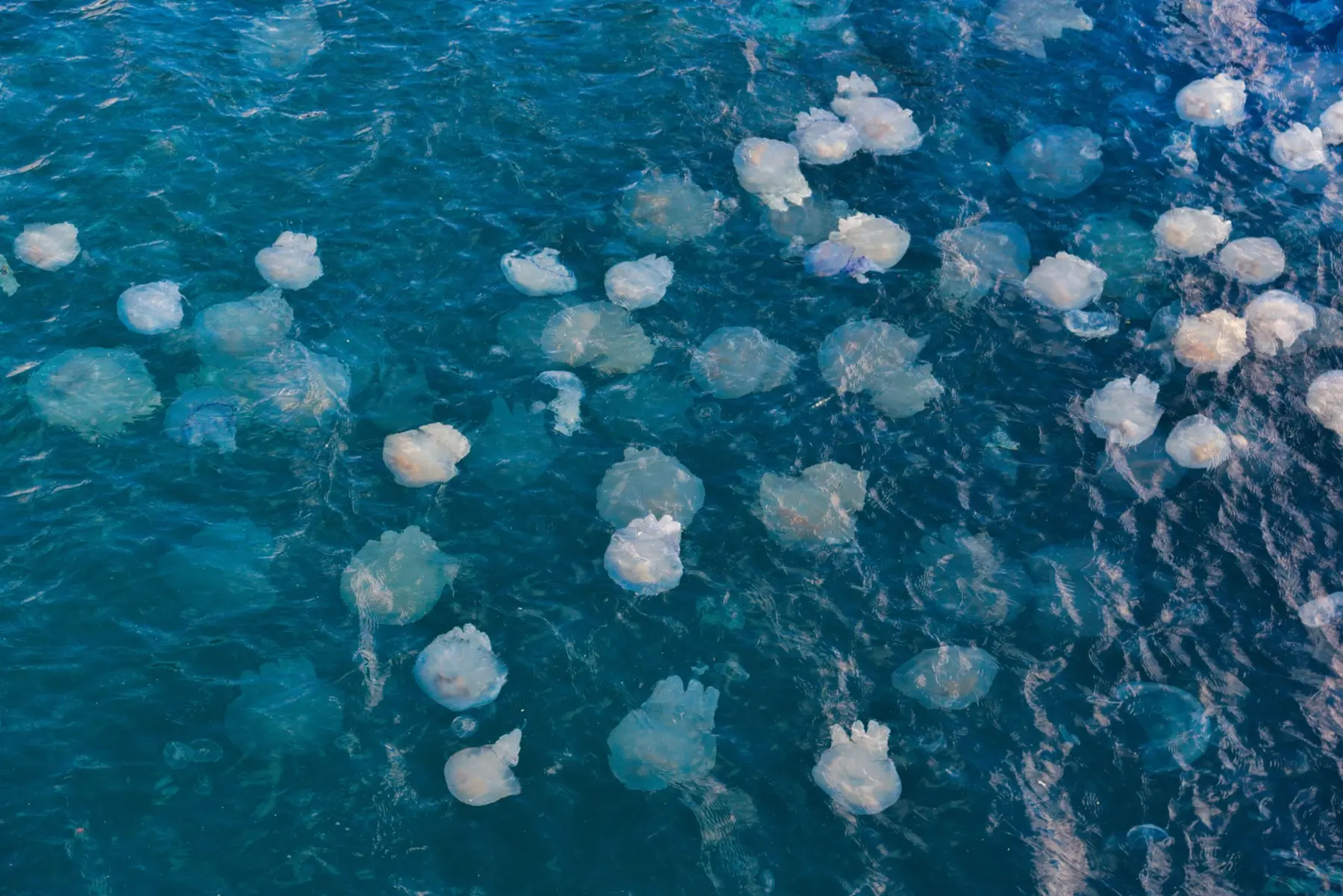
Built for a particular place and way of living.
“Jellyfish” covers a wide range of gelatinous animals rather than one species. Their pulsing bodies can look simple, but they are successful predators and prey that occur from coastal lagoons to the deep ocean.
Range. Oceans worldwide; some groups also occur in brackish or freshwater environments.
Habitat. Open ocean, coasts, estuaries, lagoons and deep water depending on group and life stage.
Natural history
Food and feeding. Mostly zooplankton, fish eggs, larvae and other small organisms captured with stinging cells.
Reproduction and life history. Many species alternate between a free swimming medusa and a small attached polyp stage, allowing populations to respond quickly to favourable conditions.
Conservation priorities depend on the species’ biology, habitat, range and rate of reproduction. These factors shape how quickly a population can recover and which pressures require the most attention.
What role does it play?
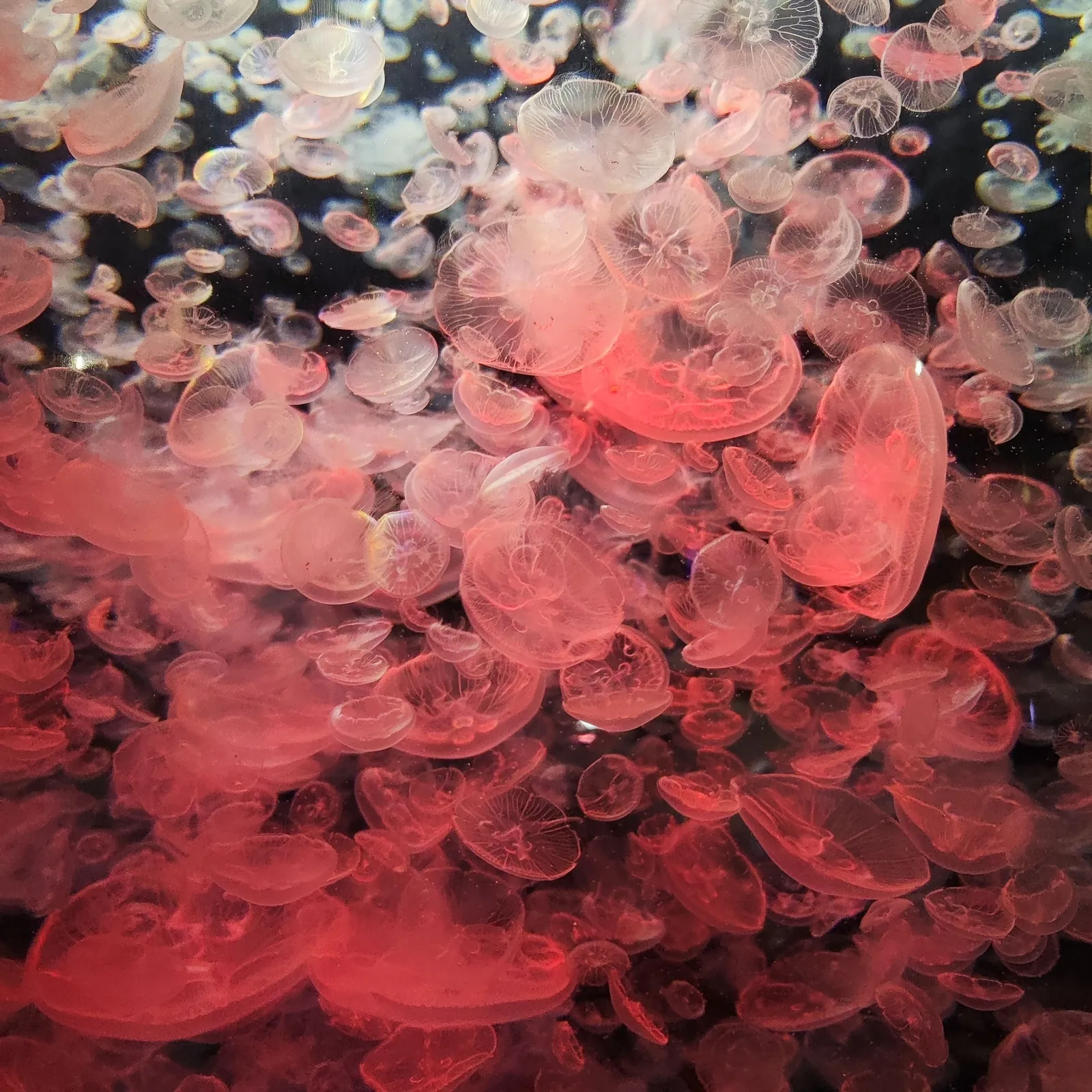
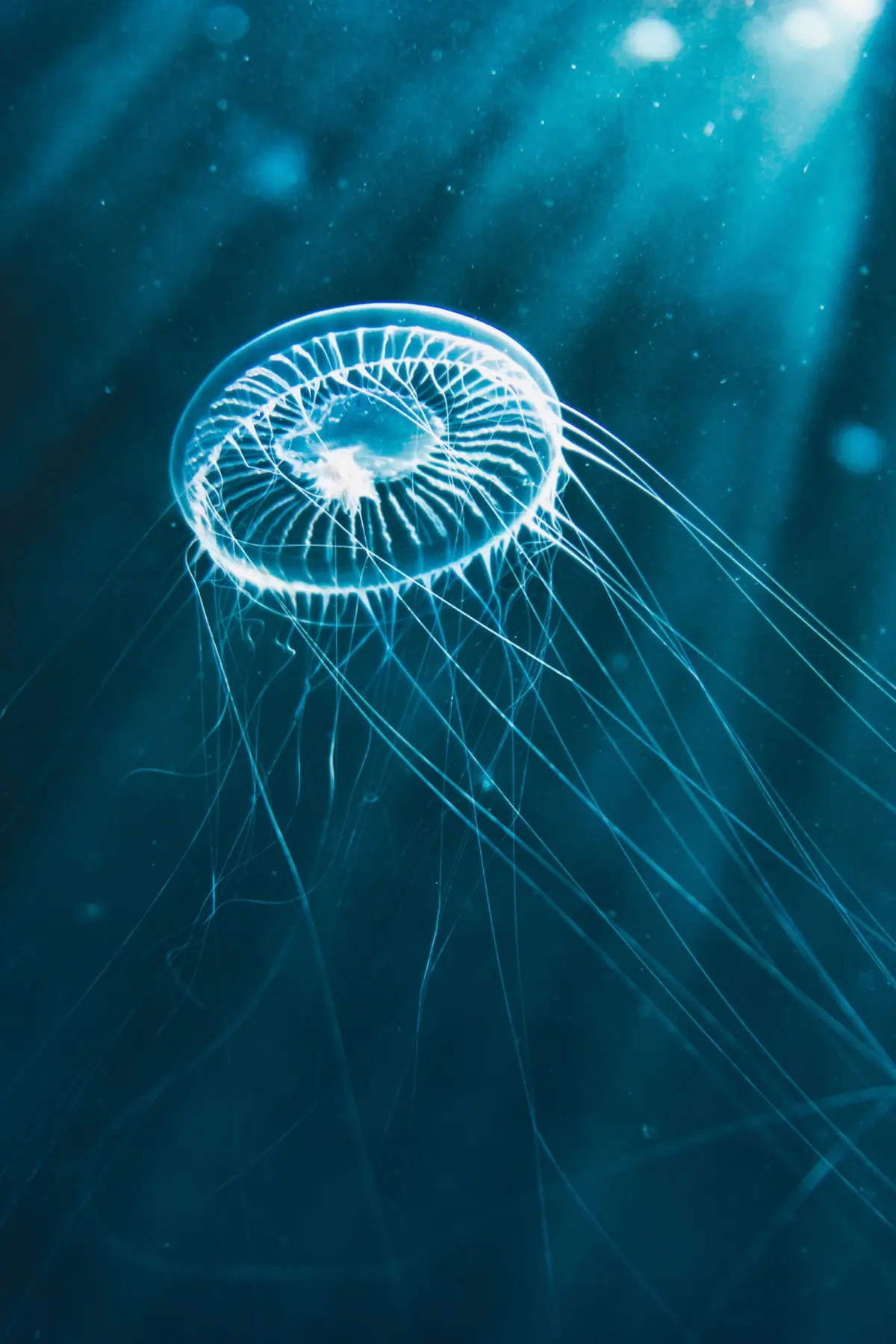
Jellyfish transfer energy through marine food webs and are eaten by animals including sea turtles and some fish.
Ecological roles are rarely isolated. Predators depend on prey, grazers depend on productive vegetation, marine species depend on currents and nursery habitats, and forest species may depend on canopy connections that extend beyond protected area boundaries. Protecting a species often becomes a question about the wider system that keeps its life cycle possible.
Pressure and practical action
Threats vary between populations and places, so the list below is a guide to the major pressures associated with this species or group rather than a claim that every population faces every threat equally.
Key pressures
- Jellyfish as a group are not uniformly threatened
- Local populations respond to temperature, nutrients, oxygen and predator changes
- Plastic can be mistaken for gelatinous prey by predators that eat jellyfish
- Coastal ecosystem change can alter bloom frequency
What helps
- Protect whole marine food webs
- Improve water quality and reduce nutrient pollution
- Reduce plastic pollution
- Study blooms without treating every increase as proof of a single cause
Sri Lanka context
Jellyfish are a normal part of marine ecosystems around Sri Lanka. Understanding them matters for food webs, fisheries, tourism and public safety, especially when seasonal blooms occur.
Where CuteFela discusses a species in Sri Lanka, the local context stays specific by considering the habitat involved, whether the species is native, how people and wildlife share space, and which conservation tools are relevant. For species that do not occur on the island, the guide says so directly.
Start with specialist sources.
Conservation assessments are periodically updated. Use the linked specialist and institutional sources for the latest status, range and management information.
NOAA Ocean Service Jellyfish ↗Smithsonian Ocean ↗